
Multi-site with dedicated SAML based backend login
TIP
This example was brought to me in issue #101. This user was asking about how to implement SSO/SAML with Azure Ad (see Azure AD instructions here) with 2 NuxtJS sites as the frontend and Craft CMS as the headless backend.
Problem
As mentioned above, this Craft CMS instance has 2 frontend sites that use NuxtJS to serve content from Craft CMS (headless mode, in this case). Users are not authenticating for authorization to the frontend NuxtJS sites, they are simply consuming the content presented. Content creators need a way to login to the Craft CMS using SAML SSO.
Solution
Creating a Craft CMS Site for the Control Panel
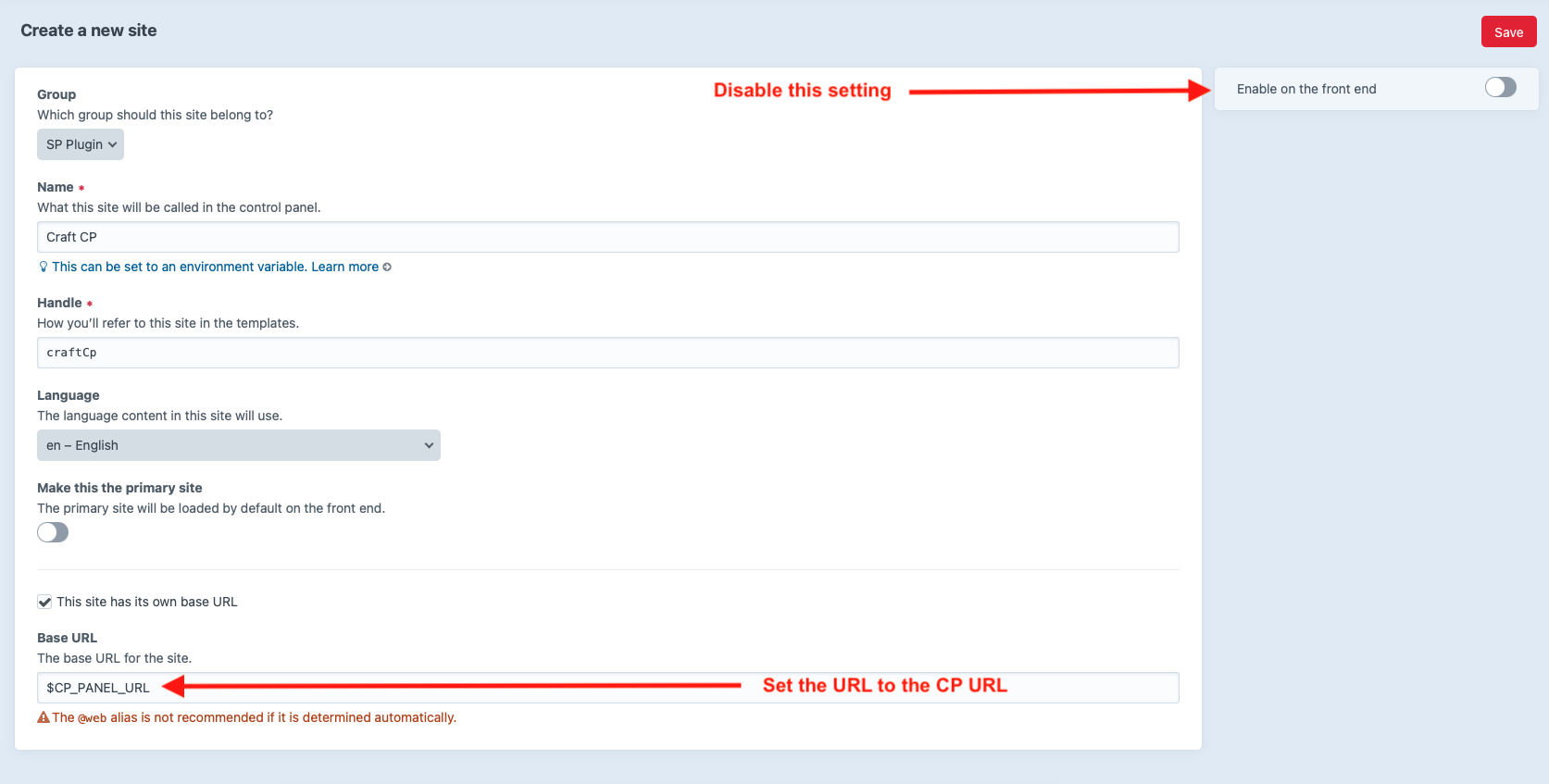
As of Craft CMS version 3.6.10 (maybe before?), we now have an option to set Craft CMS Sites to be disabled on the frontend. We recommend adding a site specifically for the Craft CMS control panel/backend. This allows the plugin to easily utilize the base url for building the SAML documents as needed.
Selecting the Site as the Service Provider endpoint
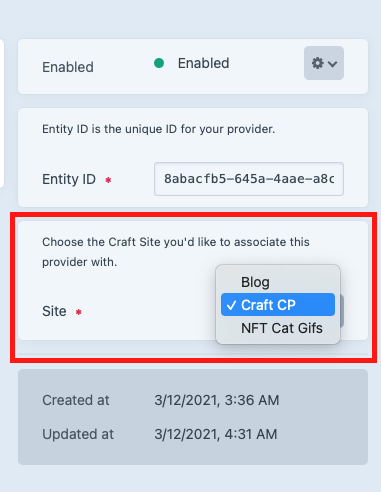
As of SAML SP Plugin version 2.6.0, multi-site is now fully supported. On the provider edit screen, you can set the site desired to associate the url (base url from the site) as needed.
At the "My Provider" edit page, on the side bar, select the Craft CMS control panel/backend/admin Site you just created.
Login - Utilize CP Login Buttons
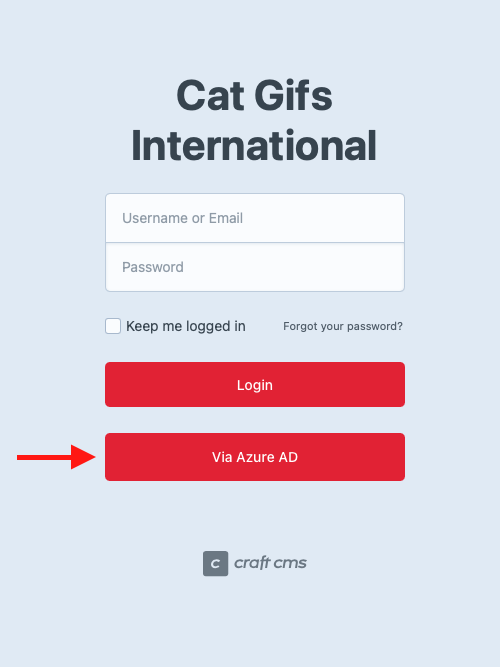
Instruct users to login via the Control Panel login but by using the SAML SP "via" buttons.
Control panel on its own domain
As of 5.2.2, the SSO and SLO endpoints (/sso/login, /sso/login/request/..., /sso/logout/...) also respond on control panel requests. This covers a control panel served from its own domain with baseCpUrl and no cpTrigger, where every request on that domain is a control panel request. Earlier versions returned a 404 there.
Use the same domain for the whole flow: the CP site's base URL from the step above should be the CP domain, so the login buttons, the ACS URL in your SP metadata and the IdP's configuration all point at it. The SAML request ID is stored in the session for that domain, and a response arriving on a different domain is rejected.